Jazz Struggles Continue: Nuggets Exploit Early Lead for Decisive Victory
In a performance that underscored the vast chasm between an NBA contender and a team grappling for identity, the Denver Nuggets delivered a basketball masterclass, cruising to a dominant 135-112 victory over the Utah Jazz on Monday night, December 22, 2025. This particular nuggets jazz game will be remembered not just for the final score, but for Denver's breathtakingly explosive start that left the Jazz reeling and searching for answers.
From the opening tip, the defending champions exhibited a level of intensity and precision that few teams in the league can match. The Mile High City witnessed an offensive onslaught that began immediately and barely relented, showcasing why the Nuggets are a force to be reckoned with. For the Jazz, it was another painful chapter in a season marred by inconsistency and the disheartening trend of falling into deep, early deficits.
The Avalanche Begins: Nuggets' Unstoppable Opening Charge
The first four minutes of the nuggets jazz game were a blur of golden jerseys hitting shots and a purple-and-gold opponent struggling to even touch the net. The Nuggets exploded out of the gate with an astounding 19-0 run, leaving the Utah Jazz stunned and the home crowd in a frenzy. This wasn't merely a hot start; it was a psychological blow that resonated throughout the entire contest.
Denver's efficiency was remarkable, converting 7 of their first 9 field goal attempts, while the Jazz, conversely, missed their first 10 shots and compounded their woes with two costly turnovers. By the time Brice Sensabaugh finally broke Utah's scoring drought with a corner three-pointer at the 7:06 mark, the score stood at an almost unbelievable 19-3. The Nuggets, however, were far from finished, extending their lead to 33-5 before the first quarter was even half over. This kind of early dominance sets a tone that is incredibly difficult for any opponent to overcome, let alone a struggling team.
This early collapse wasn't an isolated incident for the Jazz. Just 17 days prior, they found themselves in an even more dire situation, falling behind 23-0 against the New York Knicks on their way to a lopsided 146-112 defeat. While the NBA record for the biggest opening run (29-0 by the Lakers against Sacramento in 1987) remains intact, Utah's repeated susceptibility to such overwhelming starts raises significant concerns about their focus, defensive intensity, and perhaps, their mental resilience in crucial moments. Coaches often emphasize the importance of the first five minutes; for the Jazz, these periods have become recurring nightmares.
A Three-Point Barrage: Denver's Record-Setting Performance
Beyond the lightning-fast start, the Nuggets etched their name into the franchise record books with an offensive display centered around the three-point shot. They tied a franchise record by sinking a staggering 24 three-pointers throughout the game, a testament to their exceptional shooting and offensive flow. Modern NBA basketball thrives on perimeter shooting, and Denver showcased it to perfection.
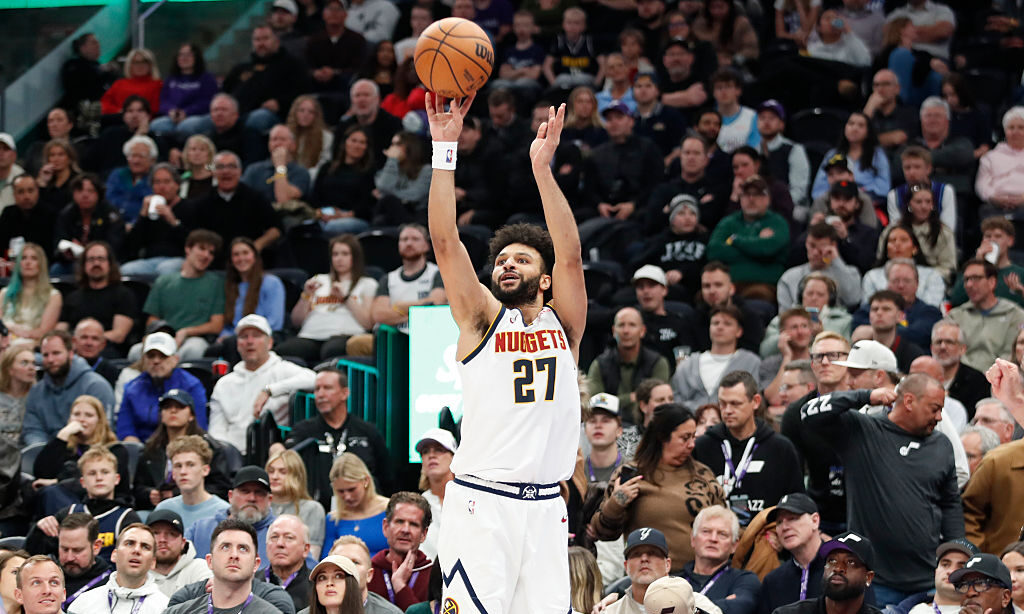
The first half alone saw the Nuggets connect on 15 of 28 attempts from beyond the arc, a blistering 53.6% clip. Leading the charge from deep was Jamal Murray, who knocked down five three-pointers in the first half en route to a game-high 27 points. But it wasn't just Murray; the depth of Denver's shooting talent was evident, with Cameron Johnson delivering a flawless performance, going 6-for-6 from three-point range to finish with 20 points.
This kind of collective long-range efficiency is incredibly difficult to defend. It stretches opposing defenses, opens up driving lanes, and creates opportunities for cutting players and offensive rebounds. When a team is hitting threes at such a high volume and percentage, it forces the defense to make uncomfortable choices, often leading to easy scores inside or foul trouble. For a deeper dive into this historic shooting display, check out our related article: Nuggets Tie 3-Point Record in Dominant Win Over Jazz.
Star Power and Depth: Murray, Jokic, and the Balanced Attack
While the record-setting three-point shooting was a highlight, the Nuggets' victory was fundamentally built on the brilliance of their stars and the crucial contributions of their supporting cast. Nikola Jokic, the reigning MVP and orchestrator of Denver's offense, recorded his 14th triple-double of the season and an astonishing 178th of his career. He finished with 14 points, 13 rebounds, and 13 assists, demonstrating his unparalleled ability to impact every facet of the game without necessarily dominating the scoring column.
Jokic's ability to facilitate offense is legendary, as evidenced by his assist to Peyton Watson for a layup with 7:10 left in the third quarter, which officially sealed his triple-double. This play perfectly encapsulated his selfless approach and team-first mentality.
Jamal Murray, as mentioned, was the primary scoring threat for the Nuggets, pouring in 27 points with his array of confident jumpers and drives. His synergy with Jokic continues to be one of the most potent offensive pairings in the league. However, the depth of the Nuggets roster was equally impressive. Peyton Watson, returning after missing two games, provided a significant spark off the bench, scoring 20 points. And Cameron Johnson's perfect shooting from deep (6-for-6 for 20 points) showcased the valuable contributions from players stepping up in key moments.
This balanced attack, where different players can take over scoring duties on any given night, makes the Nuggets incredibly difficult to game plan against. For more details on the individual heroics in this game, read our breakdown: Jamal Murray, Jokic Triple-Double Lead Nuggets Past Jazz.
The Jazz's Rocky Road: Dissecting Utah's Continued Struggles
For the Utah Jazz, this nuggets jazz game was another stark reminder of their ongoing struggles. The loss marked their third straight, a trend that speaks to deeper issues than just one bad game. While they showed flashes of competitiveness, particularly late in the third quarter with a 13-2 run that cut the deficit to 17, and an early fourth-quarter surge led by Tim Hardaway Jr. (21 points, with three 3-pointers in 46 seconds), these were ultimately too little, too late.
Lauri Markkanen led the Jazz with 27 points, and Keyonte George added 20, demonstrating that Utah does have talent capable of scoring. However, their inability to contain opposing offenses, particularly in the early stages of games, is a critical flaw. Repeated slow starts not only put them in deep holes but also sap team morale and force them to expend an immense amount of energy just to get back into contention.
Practical Tips for Teams Facing Early Deficits:
- Defensive Re-focus: After a quick opposing run, a timeout should primarily be used to reinforce defensive assignments and principles. Communication is key.
- Simplify Offense: Avoid hero ball. Look for easy buckets, foul opportunities, or quick, high-percentage shots to stop the bleeding and build confidence.
- Emotional Control: It's easy to get frustrated. Players and coaches must maintain composure and avoid letting the deficit compound into unforced errors.
- Set Mini-Goals: Instead of focusing on a 20-point deficit, aim to win the next three possessions, or cut the lead by 5 points in the next two minutes.
The contrast in competition faced by the Nuggets in their recent schedule also highlights the Jazz's current standing. After battling against formidable opponents like the Minnesota Timberwolves, Oklahoma City Thunder, and Boston Celtics, facing the 18-42 Utah Jazz was described as "like slipping into a warm bubble bath after swimming with sharks." This candid observation from a pre-game analysis perfectly encapsulates the current disparity between the two franchises.
Looking Ahead: Implications for Both Franchises
For the Denver Nuggets, this victory serves as another confidence booster and a clear statement of intent. They continue to solidify their position as one of the elite teams in the league, capable of overwhelming opponents with both star power and collective effort. Their depth, defensive improvements, and consistent offensive execution make them a formidable contender as the season progresses. Maintaining this level of focus and execution against all opponents, regardless of their record, will be crucial for their championship aspirations.
The Utah Jazz, on the other hand, face a much more challenging road. Their struggles are indicative of a team in transition, grappling with identity and consistency. While individual players show flashes, the collective unit is still searching for a formula to compete effectively against top-tier teams. The repeated early deficits are particularly concerning and require immediate tactical and psychological adjustments. As the trade deadline approaches, the front office will likely be evaluating roster construction and strategic direction to address these persistent issues and chart a more promising course for the future.
In conclusion, the December 22nd nuggets jazz game was a stark illustration of two teams at different junctures in their NBA journey. The Denver Nuggets delivered a masterclass in offensive efficiency and early dominance, setting franchise records and showcasing their championship pedigree. For the Utah Jazz, it was another tough lesson, highlighting critical areas for improvement as they strive to overcome their persistent struggles and find their footing in a competitive Western Conference.